Running for more — A Conversation with Kathrine Switzer
SYRACUSE, N.Y. — Kathrine Switzer made her mark as the first woman to officially run in the Boston Marathon. What dates back to 1967 still impacts the landscape of women in sports today.
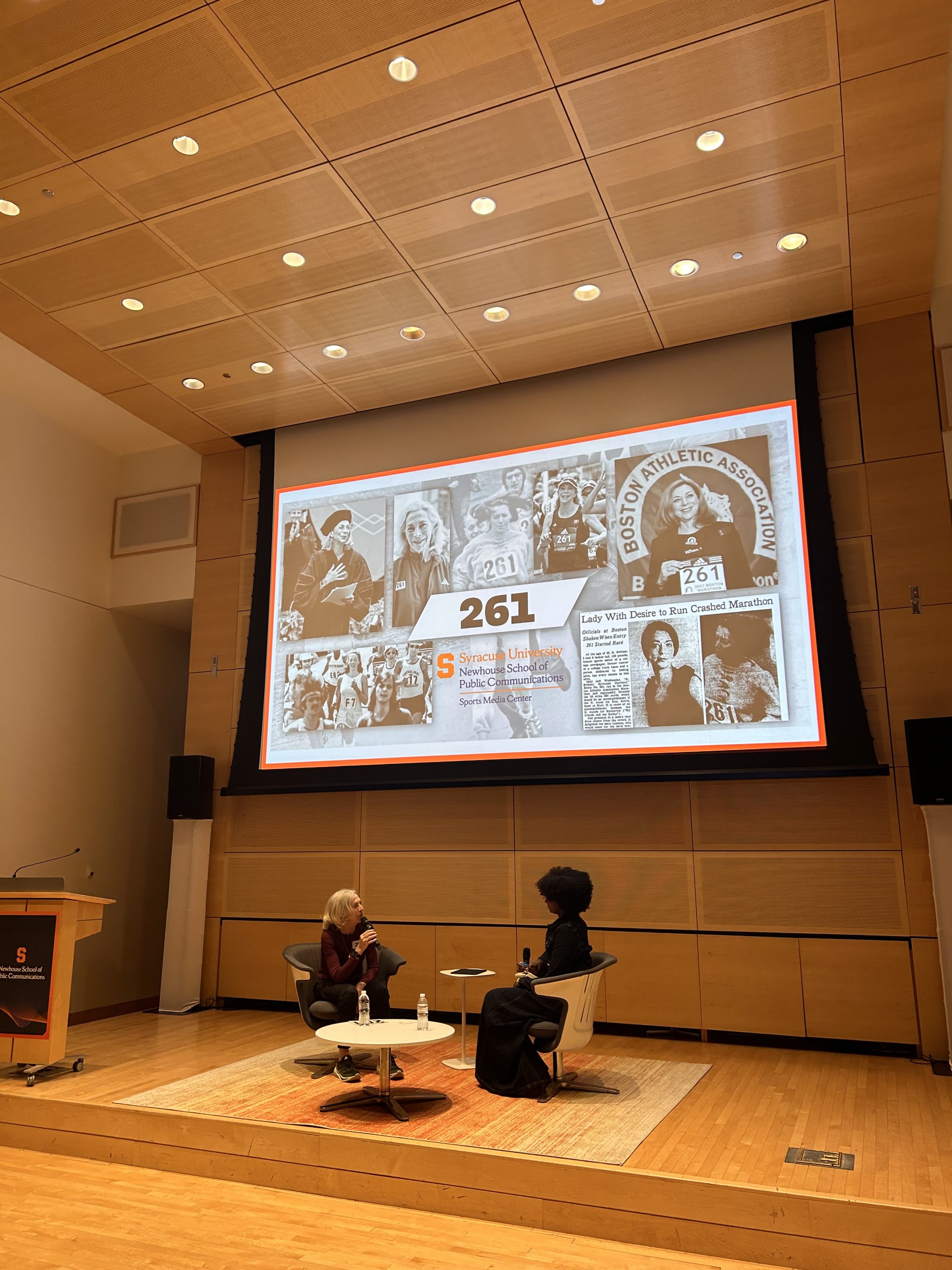
From writing the news to becoming the topic, Syracuse University alumna Kathrine Switzer joined Syracuse University students to reflect on her journey as a woman navigating sports spaces that were never built to include her.
This event celebrated girls and women in sports, bringing Switzer’s story back to where she first learned what it meant to show up in spaces that didn’t yet include women.
Switzer came to Syracuse University as a Junior with the hopes of learning sports journalism. She was drawn to writing early on as she wrote for her high school and college newspapers. Despite knowing the battle, Kathrine Switzer approached her education in the highest regard.
“I knew if I was going to get a job, I’d need an A+ degree,” she said.
When she got to campus, she was struck by what was missing. There were dozens of men’s sports and no opportunities for women. Still, she wanted to run, and running alone wasn’t enough.
Switzer sought out the track coach and asked if she could train with the men’s team. She couldn’t officially join due to NCAA regulations, but she was allowed to practice. It wasn’t equality, but it was access, and she took it. Even after overhearing doubts about whether she would actually show up, Switzer did exactly that.
“You’ve got two things to do in life,” she said. “You either show up or you go away.”
She showed up.
Through training, Switzer met Arnie, a longtime runner and mailman at Syracuse University. He became her partner on long runs, turning those miles into conversations, and those conversations into the idea of the Boston Marathon.
When she said she wanted to run it, she was told, “You have to prove it to me.”
Rather than backing down, Switzer trained until she could run the full marathon distance in practice. When she reached 26 miles, she wasn’t ready to stop. She kept going, pushing past expectations placed on women in sport.
“Women have secret power and stamina,” Switzer said, pointing to her abilities that are often overlooked or downplayed by society.
Entering the Boston Marathon was never meant to be symbolic. “I just wanted to run this,” she said. Signing the entry form as K.V. Switzer—a name she had long used in sports writing—was routine. Officials didn’t think anything of it. But, once they realized a woman was in the race, her presence was challenged. In that moment, the run became about more than finishing.
“That’s when it became about proving that I count,” she said.
As the race unfolded, Switzer said she began to understand that the resistance she faced wasn’t personal. It reflected a system that had never made space for women to participate. Instead of letting that moment end at the finish line, she focused on what came next learning how to work within the system to change it and keeping women and running in the public conversation so the moment wouldn’t fade.
Her influence stretched far beyond one race. Switzer became instrumental in the push to include the women’s marathon in the Olympic Games in 1984, a turning point that reshaped how women’s athletic ability was viewed.
“The marathon is a distance people everywhere understand,” she said.
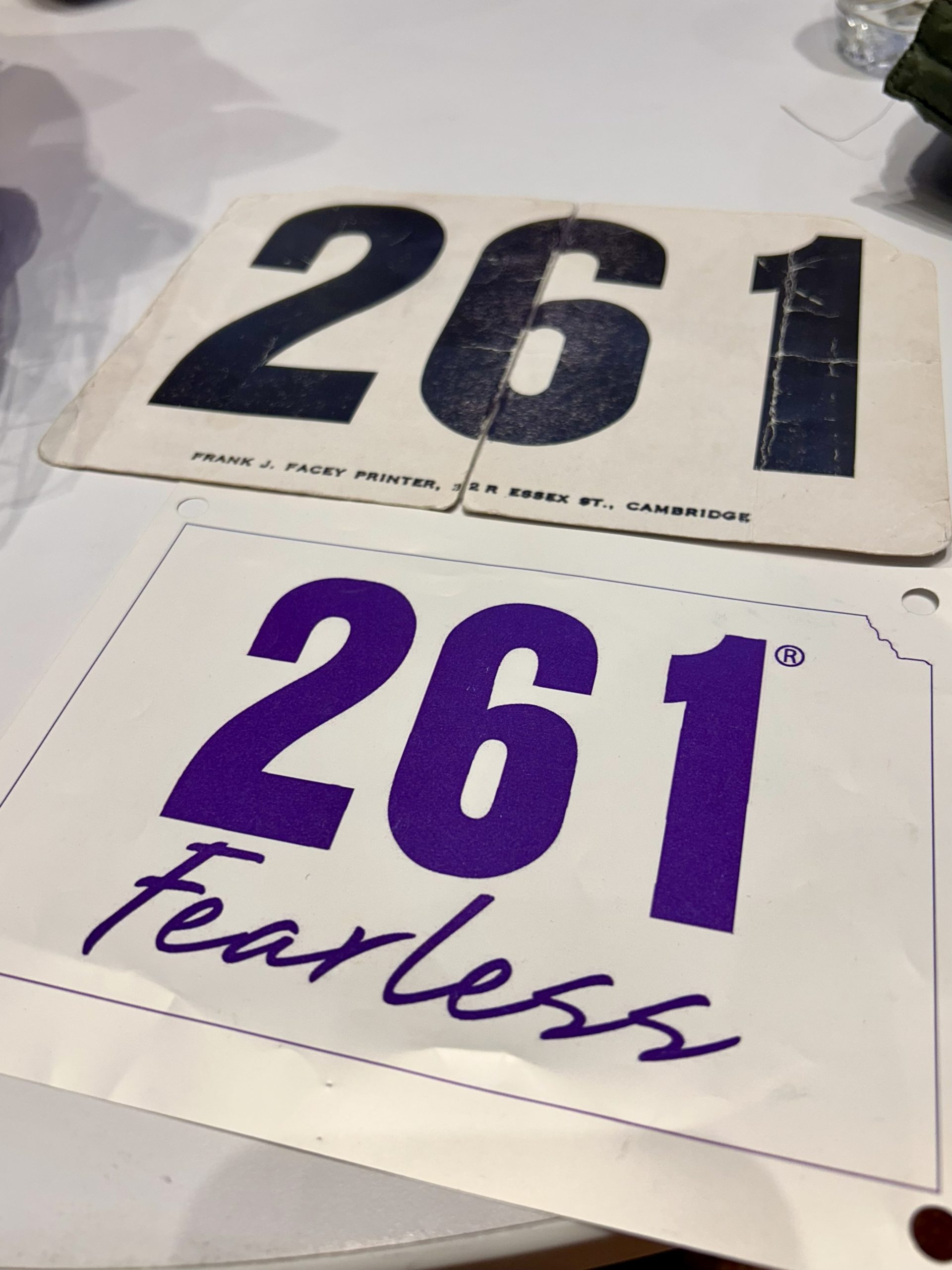
Now, that message continues to fuel her. What began as one woman refusing to settle has become a way to reach women who are still being told, in different ways, that they don’t belong. It lives on through 261 Fearless, named after the bib Switzer wore during the Boston Marathon.
Over time, the number has come to symbolize being fearless in the face of adversity. Through running, the organization works to empower women and create access where it once didn’t exist.
At the core, Switzer’s story began even earlier. Long before Boston. Long before history. It began with her father, who shaped how she approached both sport and life.
“Preparedness prevents intimidation,” he told her.
She ran knowing she was ready, with no doubt she could finish. He taught her that the game is on the field, not the sidelines. That life is about participation, not spectating. He approached parenthood with his own technique that Kathrine hopes others incorporate — to keep pushing lessons, even when you don’t know which ones will stick.
In the end, Switzer’s story is about more than running. It is about women pushing into spaces they were never meant to occupy and not settling for less than they deserve.
As of February 8th, 2026 — Kathrine Switzer’s bib number will always hang in the rafters of the JMA Wireless Dome. To remind everyone that women are always going to have a space in sports.