Orange Outreach: A Newhouse Alumni Profile with Rubin Wright ’20 G’21
Orange isn’t just a color for Rubin Wright ’20 G’21. It’s a piece of who he is.
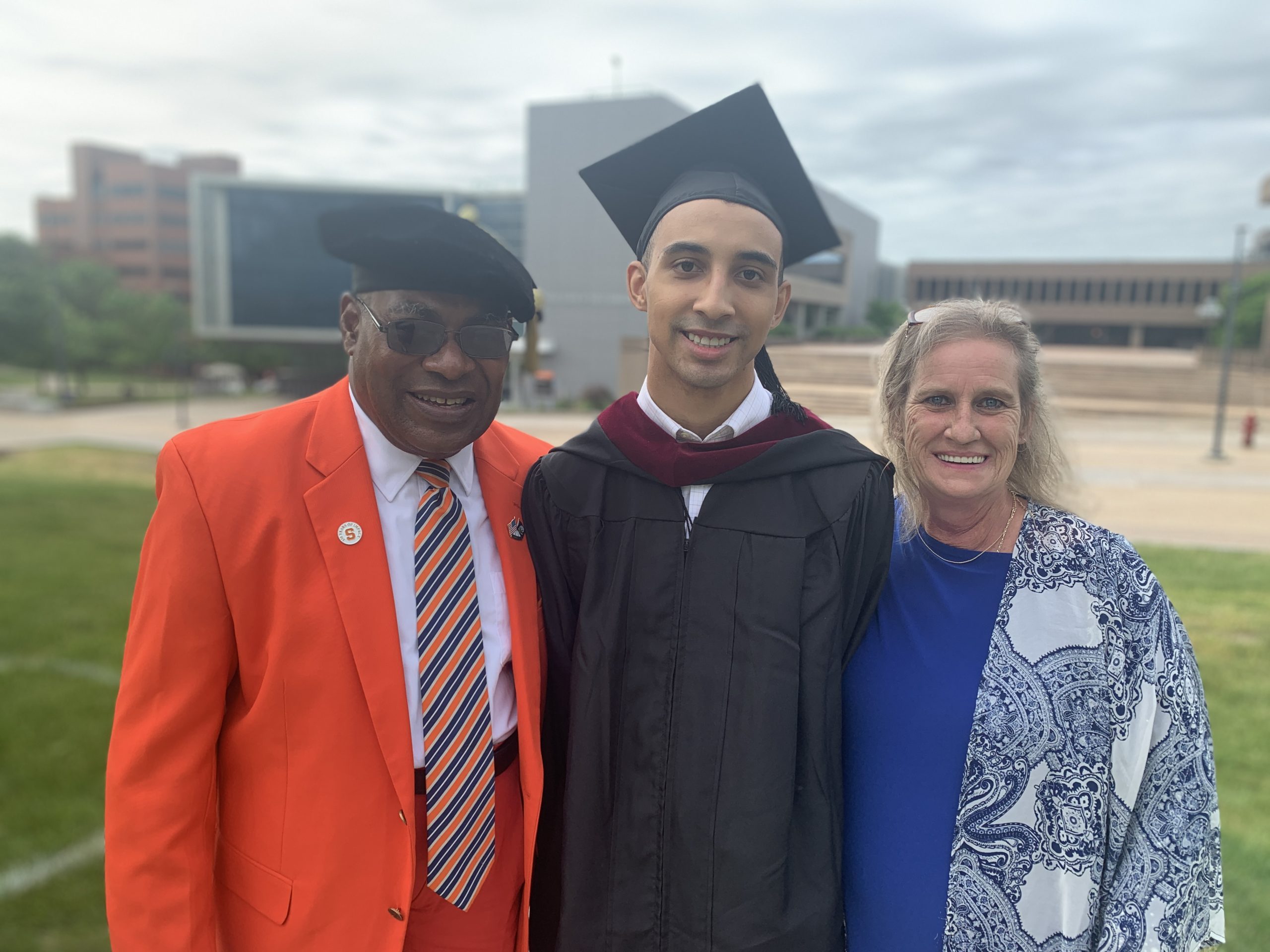
Rubin grew up in central New York with his parents Mylinda Smith and Roosevelt “Rick” Wright, who have been instrumental in the Syracuse University community for decades. After not knowing where he wanted to attend school, Rubin made the decision to stay home and attend Syracuse University. He graduated as a dual major in public relations at Newhouse and political science in the Maxwell School in 2020.
Following graduation, he worked with PBS as a project manager before coming back to campus as a professor and eventually the director of marketing for the Syracuse Orange. In February of 2026, he started as the director of marketing for the Cleveland Browns and Legends Global, tasked with the creation of the Browns’ new Huntington Bank Stadium project.
Here is my conversation with Rubin.
Q: What was it like to be surrounded by Syracuse sports your entire life?
A: “I grew up a Syracuse sports fan as a young child, got to see the ‘03 championship team, got to see some of the greats like Gerry McNamara play college basketball. Donte Greene, I recall very vividly before he left us. On the football side, I remember the Greg Robinson days, Doug Marrone days, Dino Babers, but I also had the great luxury that I ended up going to school at Syracuse and I got to continue to take on those memories. Overall, it’s been a great ride. I know a lot of people talk about this roller coaster that is Syracuse sports, I can for sure say that over the last almost 30 years, I’ve ridden that roller coaster to the extreme.”
Q: You’ve had the unique experience of growing up a Syracuse fan, attending the school both as an undergraduate and a graduate student, then working at SU. How was it to have all of those different angles about being with the Orange?
A: “The different connections has been helpful at each stage. Early on as a kid it was awesome to just root for the team, from an undergrad and grad perspective to be able to attend the top communication school in the country in Newhouse and kind of mix that with the Maxwell School, that was awesome. But then also after leaving college, ultimately being able to make some successful career decisions that the university thought I was good enough to be able to teach the students of Newhouse was honestly something that I’ve always wanted to do. I didn’t know when it would come in my career and I was happy it came relatively quickly following some of the successes I’ve had in my career.”
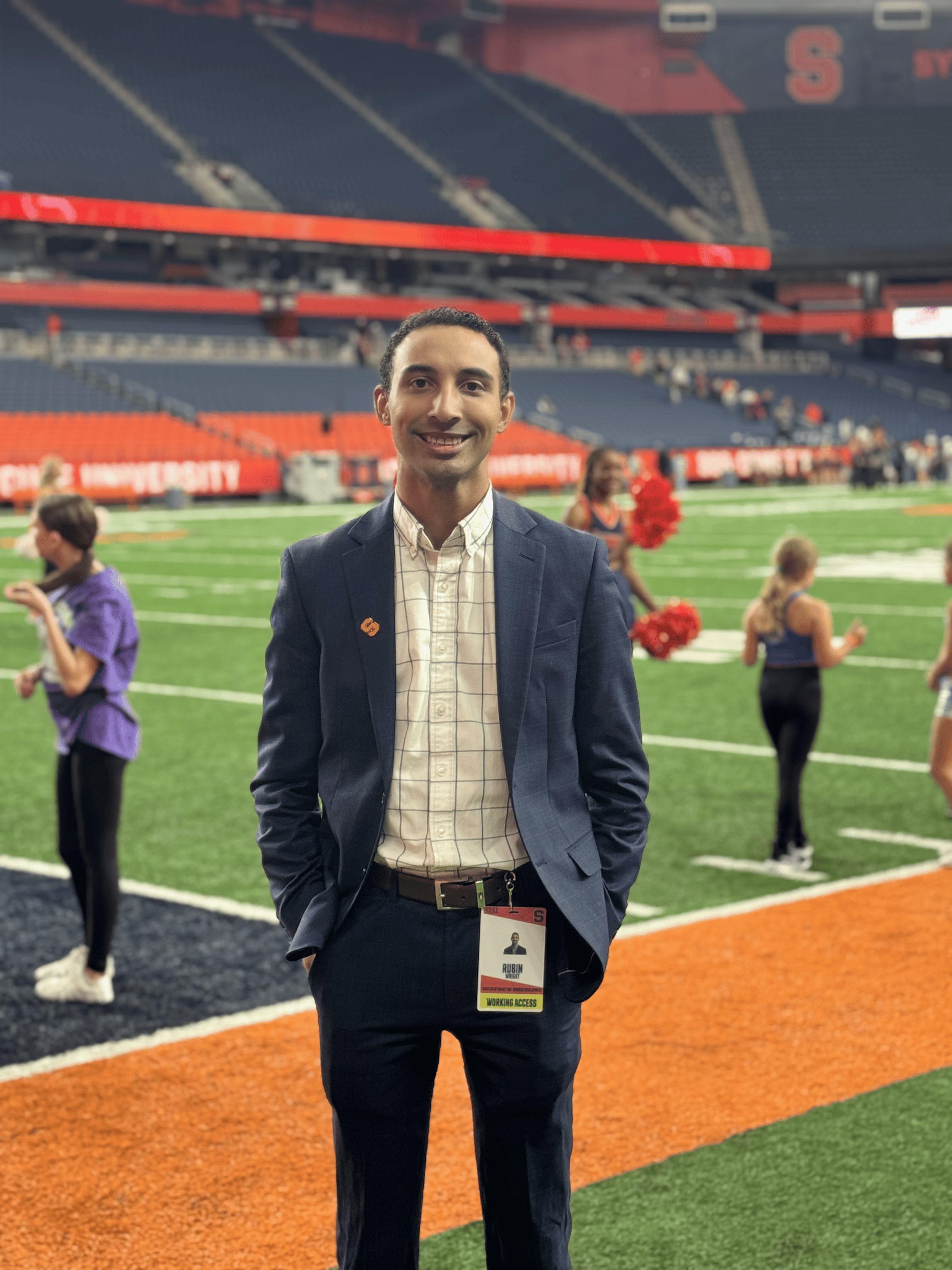
Q: How was being a dual major in Newhouse and Maxwell?
A: “It was pretty tough. I think kind of going into it, I thought it was going to be not necessarily a cakewalk, but I thought this is going to be really great for my resume. You’re literally joining two of the most premier institutions, not only in Syracuse, but honestly in the country. It’s insane what both those schools do. When you combine both of them, yeah it’s a great education, but I will say it’s a little challenging. When a lot of my friends and peers had the luxury of doing other extracurricular activities or clubs, I routinely found myself not being able to do those. At the end of the day, it makes you a more well-rounded person, but definitely going into it I could retell myself that, hey, you need to prepare a little bit better than you did.”
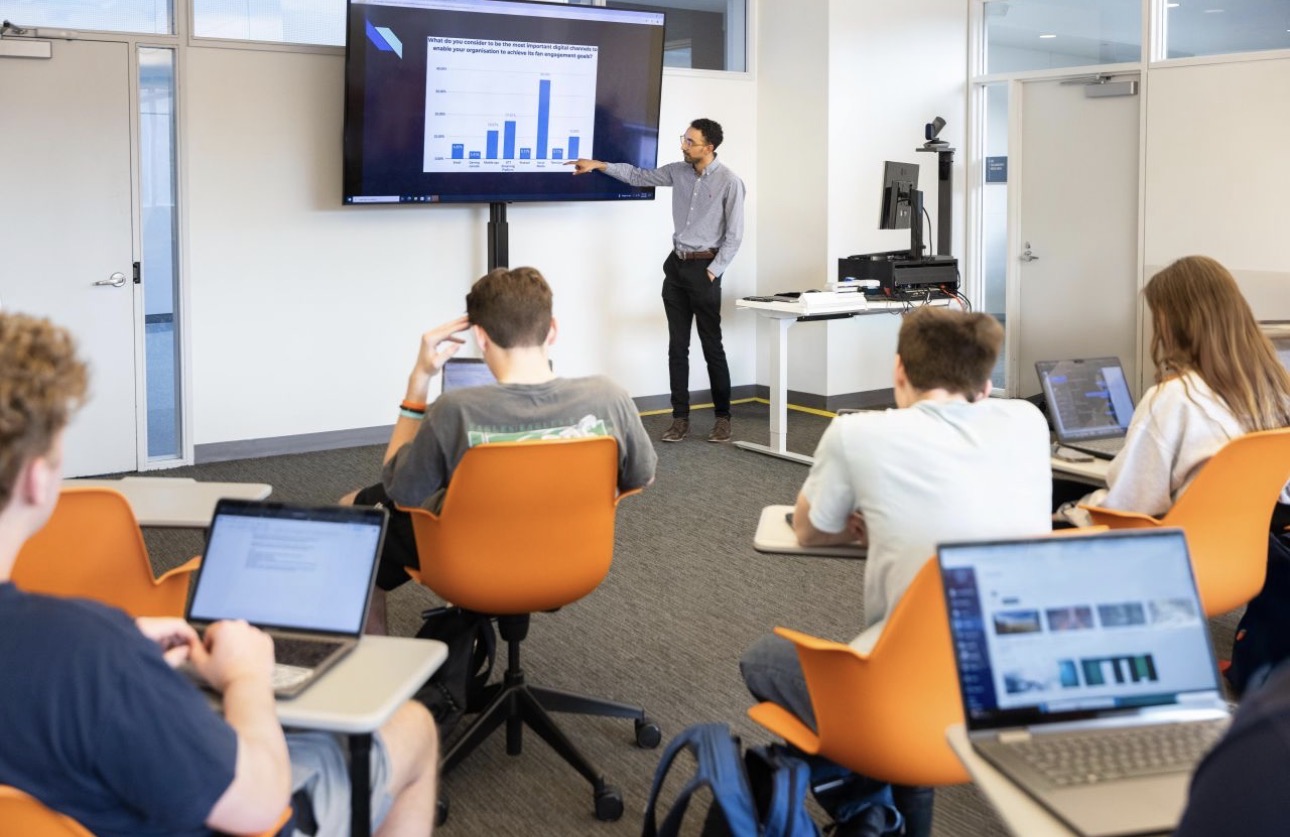
Q: What were your experiences of teaching at Syracuse just a few years after graduating from SU?
A: “I would say overall from a teaching perspective and what made it profound to myself is that it was the ability to pass knowledge onto like-minded individuals that I didn’t think I would be able to do for the next 20 or 30 years. I think everyone has the idea when they’re in college, [they] go to watch a speaker, they see a professor and think ‘hey, it’d be really awesome to change someone’s perspective or life, like how this person’s changing my perspective or life. For me getting the opportunity to do that, I found it very impactful. One of the biggest things that Newhouse and especially the Sports Media Center taught me was that you want to have people who are in the industry teaching you. If you want to be the most media professional, media trained, ready to go into the workforce, you need someone who’s been in the workforce at the moment. So, for me, that was really refreshing to be able to teach someone and something that I wish I could’ve had, but I hope that future students also have that.”
Q: You graduated in 2020 which was an interesting time in the world, can you take us through that experience?
A: “Many people who know me personally know [I] did not want to go to grad school. I’ve learned what I’ve learned. I had a job lined up to work for ESL One, which is an esports company, what I always call the ESPN of the esports world. Covid happens, I’m out. I think it’s challenges in life. What can you do in a difficult situation? I mean, there was not much you could do. You couldn’t get a job. I didn’t want to just sit around doing nothing, I’m not that type of person. It was, hey, how can I make myself better. How can I improve my chances? In that time and moment it was, hey, let’s go to grad school. It allowed me to explore some areas of Syracuse and Newhouse that I never got the chance to as an undergrad, because I was so busy with being a dual major.”
Q: How was having your parents around to support you on your journey through Syracuse University?
A: “I always get asked the question ‘Was Syracuse your number one choice?’ It wasn’t, and I would say they’re a big part of the reason [why I came to Syracuse]. My parents took this kind of step back where they said ‘Hey, you have really good grades, you can go anywhere you want to go.’ I had been around the university for so long, I know so many people that graduated from the university. It wasn’t my first choice, just inherently, but I will say that I realize now how great it was to have them there. I think one of the biggest things when you think about going to college is there is uncertainty in your life. For me, it was the first time living away from my parents. Luckily, they also from a house standpoint were twenty minutes away, but I could pop into their office if need be. You need that support system to be successful. All the internships I did starting as early as I did from sophomore year, all the experience I had on campus, all the opportunities I had on campus, like being a double major, I don’t know if I make it through without having that support system.”
Q: Being around Syracuse for so long, how have you seen the Newhouse Sports Media Center grow over the years?
A: “I remember when Professor Stomski took the job [as Director of the Newhouse Sports Media Center]. I remember naturally, my mom moving over with her and I think the biggest thing for me was they had a vision. There was something that needed to be in place. Syracuse is a world- renowned sports institution. One thing I will take away is, we train sports people without a sports program. Some of the most successful people, the Mike Tiricos, the Sean McDonoughs, they weren’t sports majors. They were just broadcast majors that had the right mentors. I think inherently where the Sports Media Center is today, I think it might be ten years out now to this year, is the opportunities that are now available. The internships, the support, the help, the classes, the professors, it’s all three, four, five [times] what we had earlier. It’s been amazing the success that’s been had. It’s also amazing the amount of alums that have been produced specifically from the Sports Media Center. To look in the last ten years, some of the young talent that’s been cultivated. People that I know personally or have had the chance to cross pathways with. The Noah Eagles, the Drew Carters, those people are all foundational from the Sports Media Center. You don’t have that kind of young talent wave if you don’t have the Professor Stomski’s of the world who are kind of the charge.”
Q: What was it like leaving the comfort of Syracuse to pursue an NFL job with the Cleveland Browns?
A: “It was kind of a no-brainer for me. I got some advice from some mentors and one of the biggest things they said is ‘It’s the NFL.’ That was all they said. Getting the chance to work in the NFL has always been a lifelong dream for me, but I’ve always said to myself, find the next step for you, that will impact you three, four, five, ten years in the future. For me, when I went to Syracuse, that was something earlier on in my career to do, I wanted to be a director of marketing at a big Power Five institution. I checked it off my box. Right from there, it kind of set the goals in motion for what I wanted to do next. I knew that college is great, but the professional side is kind of the gold standard. When you see some of the most successful people, at least in the marketing industry for myself, they have been in the professional landscape at some point or another. So it was awesome to take that step with the Browns.”
Q: What does your day-to-day look like working with Legends Global and the Browns?
A: “The stadium opens in spring of ‘29. There’s a lot of things that go into it that I realized, [but also] that I didn’t realize. A lot of people think, they’re building a new stadium. What does that mean? It’s trying to put people into that new stadium. It’s trying to transition season ticket members inside the new stadium. It’s trying to maybe find new buyers for that new stadium. But also additionally, what are we using to sell the new stadium tools wise? What does parking look like? How do you start to anticipate where people are going to park, what does that look like? Some of the aspects of hey, we’re building a stadium that’s not just a stadium. It’s a district. It has food, restaurants, shops around it as well. So how do we start positioning the marketing and messaging around it? Ultimately I would say 50% of my job that encapsulates outside of the building the sales tool, modeling stuff, doing data, the lead gen aspect. How are we making sure that when the stadium opens in 2029, that stadium is sold out? That is the goal with any new stadium.”
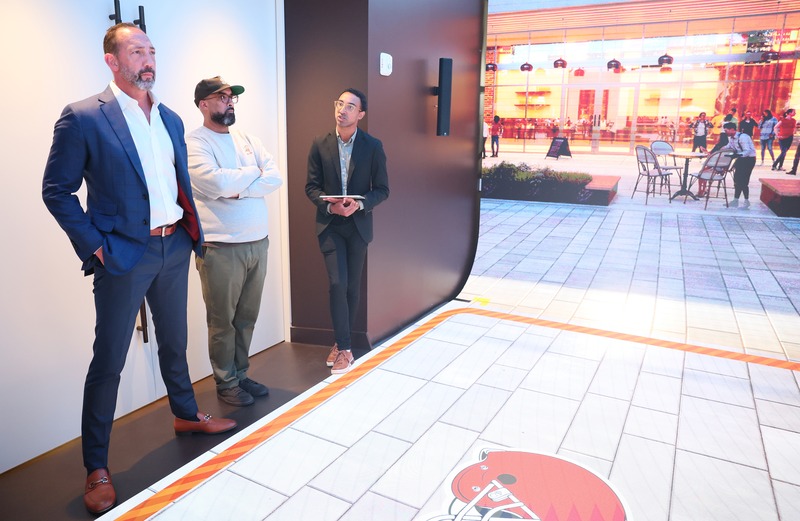
Q: How does it feel to have an opportunity to be a part of the change that could bring winning football back to Cleveland?
A: “It’s honestly one of those things when I think people talk about, not necessarily resume, but I would say moments in time. Not everyone’s going to be able to say they could do this or not. That’s one of the things for me. I never thought that I would have the chance to say in three years for the rest of my career, when people talk about the new Huntington Bank Field, the Cleveland Browns stadium and they talk about ‘wow this a great experience’ or ‘look at how it looks’. To be able to say, hey, I was involved in that. To have that kind of on your own time, it’s phenomenal. I had a chance of knowing some people that had been a part of the Rams stadium when they built SoFi and just hearing the experiences they had, it shapes you. But overall, it’s just something you can’t really describe because it’s so unique. You get to literally set a new starting point for a franchise. This is the starting point that then takes us to the next 30 years. When hopefully in four, five, six years, when the Browns win a Super Bowl and you can look at a catalyst point and you can carry that with you for the rest of your life.”
Q: What has been the biggest challenge for you in your roles?
A: “I have found myself now in two sports organizations. I was at Syracuse with not good basketball teams and not good football teams. And I enter a Browns organization that again, there’s not any way to sugarcoat it, they’ve struggled a little bit. That’s a challenge right? Everyone wants to win football games. As some of the best people said, winning solves everything. Losing does not help anything. So that’s one of the biggest challenges I would say, how can we write the ship? I have no involvement in the team. I don’t control player personnel. But what I can control, is how are we shaping any future? How are we being fan first? I think that is a challenge to balance team performance versus what people see in the value of supporting a team. One of the biggest things I’ve learned is, hate is an emotion. Emotion is something we like to see, whether it’s a good emotion or bad emotion, that means you care. We can’t have apathy, because I can turn hatred into love by winning or creating fan first policies or by creating a stadium that’s going to make you love what you have.”
Q: What advice do you have for current Syracuse students?
A: “Take advantage of the speakers that come, go to as many as possible. Don’t see it as a requirement, see it as a further for your job. Those connections you make are going to help influence you over the next 10, 15, 20 years of your career. Second, take advantage of the faculty. The faculty a part of the SMC are the best in the business. They are literally second to none and no school that I’ve been exposed to where I’ve seen the faculty or students they’ve produced that have had the same knowledge as the professors in the SMC. So you got to take everything they have in. And I think finding those things you weren’t able to do in undergrad. The more well-rounded you can make yourself, the more successful you’re going to have of prospecting yourself into a job. There’s not a lot of people that can walk in and say ‘Hey, I’m very good at what you need done’.”